
CASE STUDY:
EXPEREALITY
PROJECT GOAL
To improve the sphere in which video game accessibility revolves around, through the establishment of UX/UI design guidelines for video games, to enhance visual consistency and usability whilst simultaneously preserving creative freedom.
TOPIC OVERVIEW
The GX, or “Game Experience,” of a game relies heavily on the way a player is able to interact with the creations given to them. To involve effective immersivity, while being available to all kinds of individuals, consideration of visual accessibility, such as integrations of physical and adjustable UX/UI aspects, are important to integrate for positive user experience.
PROJECT EXPERIENCE
This project was initially derived from my experience with video games that lacked accessibility adjustments to the UI visuals, causing difficulties maneuvering games not just with myself, but with other players who I have seen experience similar when wanting to enjoy a game.
So, I aimed my project focus towards the impact of visual accessibility adjustments in video games. I want to improve the sphere that video game accessibility revolves around, through the establishment of UX/UI design concepts that enhance consistency and usability, whilst simultaneously preserving the developers’ creative freedom.
Thus, the birth of “ExpeReality,” a company whose focus is on combining accessibility, immersivity, and exploration, and bringing it straight to the player’s home.
RESEARCH
To start off, I focused my initial research around these three different methods:
- Deductive Research
- Qualitative Research
- Quantitative Research
… as I initially focused heavily on delving into the focus of “Does the way a game look matter to a user’s experience?” and continued off of that question.
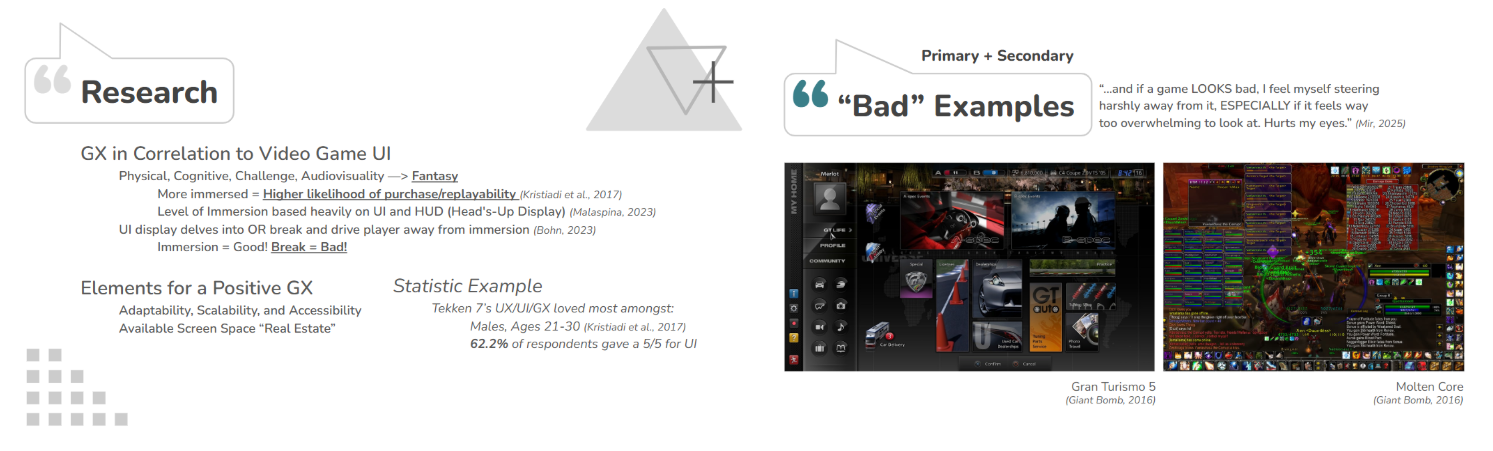
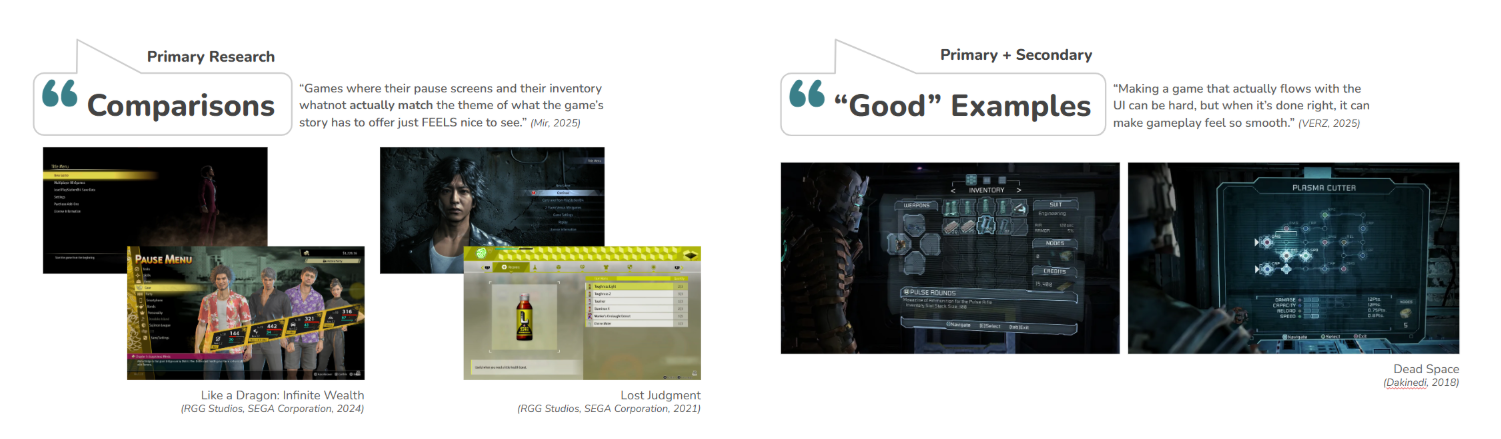
Demographical and preferential inquiry research results.
I then focused on trying to see what my issue would lean more towards in terms of demographics and preferences, scoping my endeavors with this project to focus on both the consumers’ side, and the creators’ side. In the overall sense, my target audience was aimed towards those that revolve around the realm of the gaming industry, from developers and designers, to actual gamers.
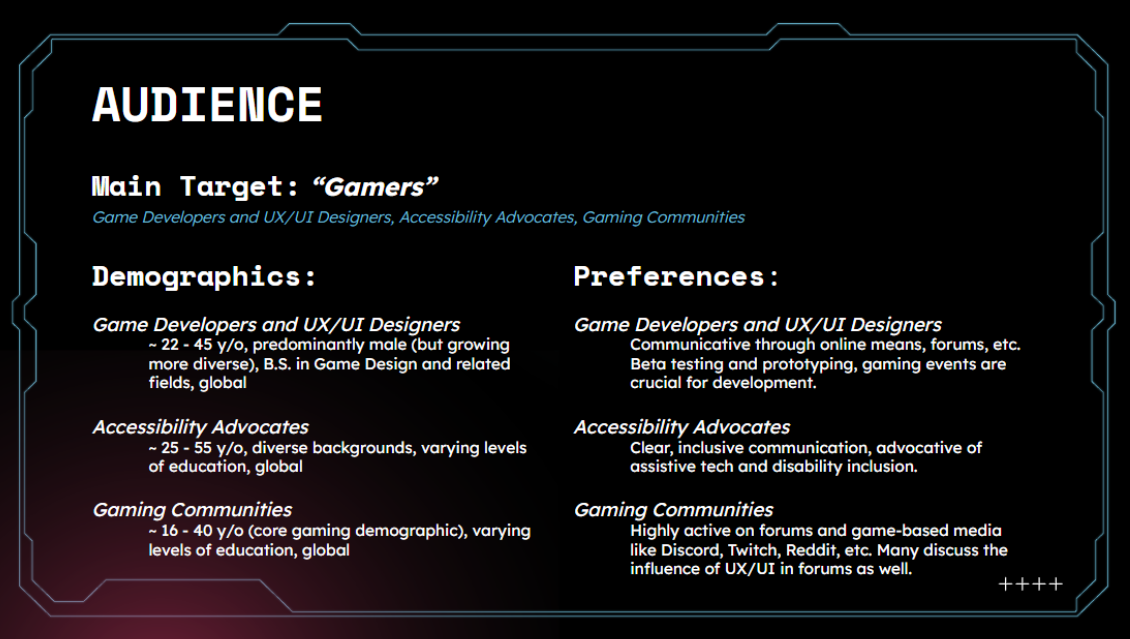
Target audience research results.
VISUAL IDENTITY
Then, I moved onto the branding aspect, to which the main focus of my visual identity for my branding relied heavily on what the common gamer tends to imagine when thinking of the concept of “gamerhood” as a whole, leaning heavily towards more gradients that lean conceptually RGB-coded, typefaces that felt sharper and more visually defined, and textures that gave off reflective, smooth, or glow-like elements to them as well.
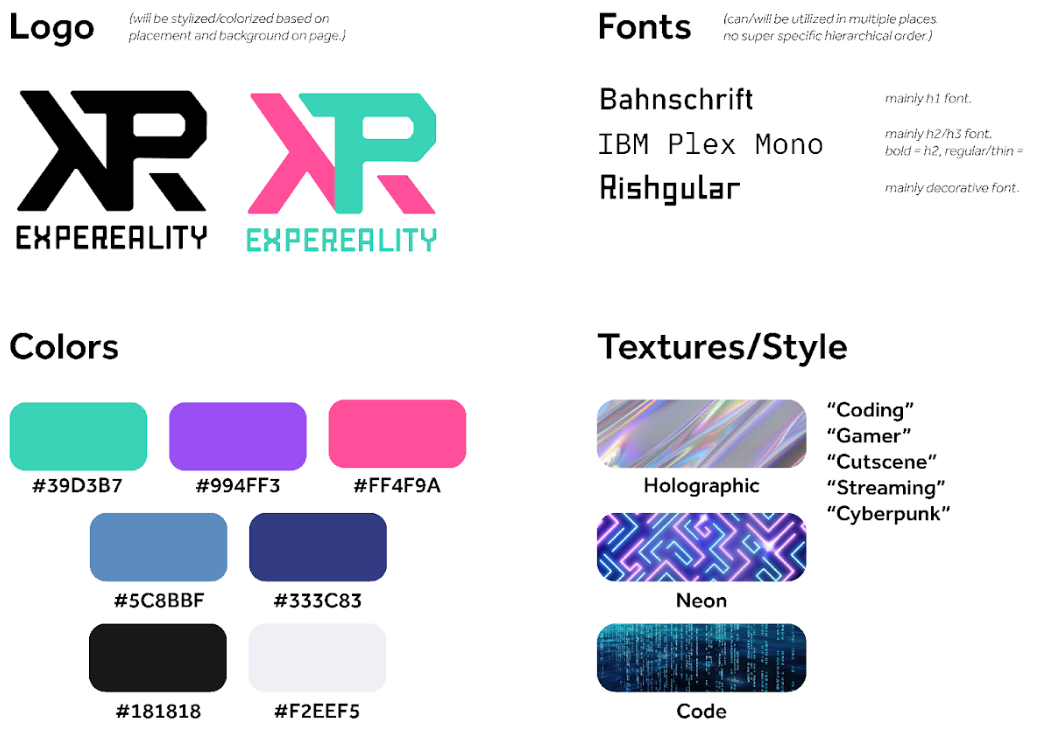
Brand Identity sheet for the company, “ExpeReality”.
PROJECT OUTCOME
In terms of the overall app, the app consensus came out as rather “neat” and “straightforward” by the different age ranges that had participated in this research study. In relation to such as well, the most each individual had taken was only a few seconds for each click, the older user in particular adding to misclicks due to them wondering if the buttons being pressed would work or not, curiosity arising at the features and functions.
INTERACTIVE
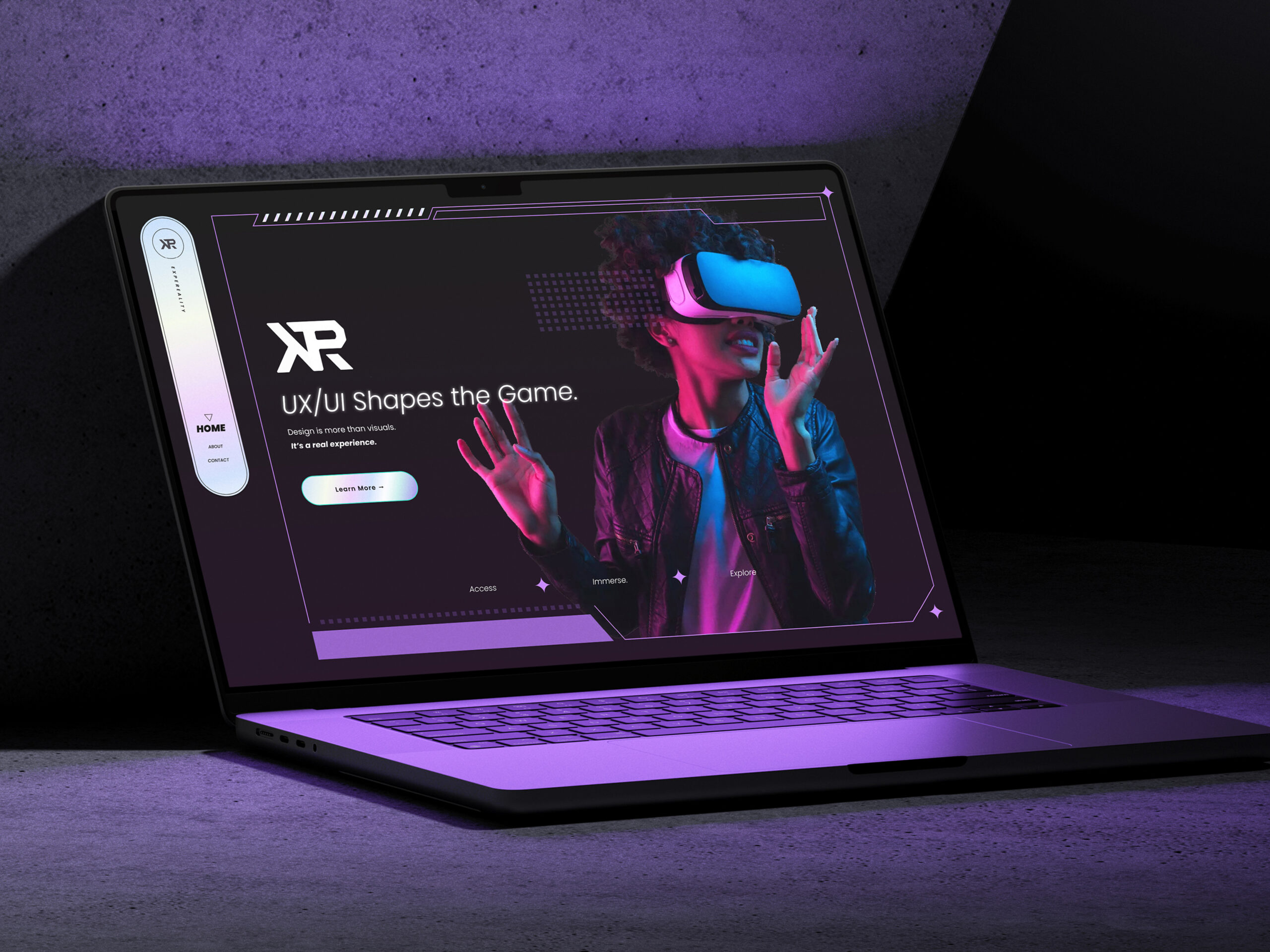
FIGMA PROTOTYPE FOR THE “EXPEREALITY” WEBSITE
A website that helps bring together my company, ExpeReality, and its goal, educating others while simultaneously providing resources, workshops, and other information that show the importance of UX/UI considerations to think about when creating a video game.
ENVIRONMENTALS
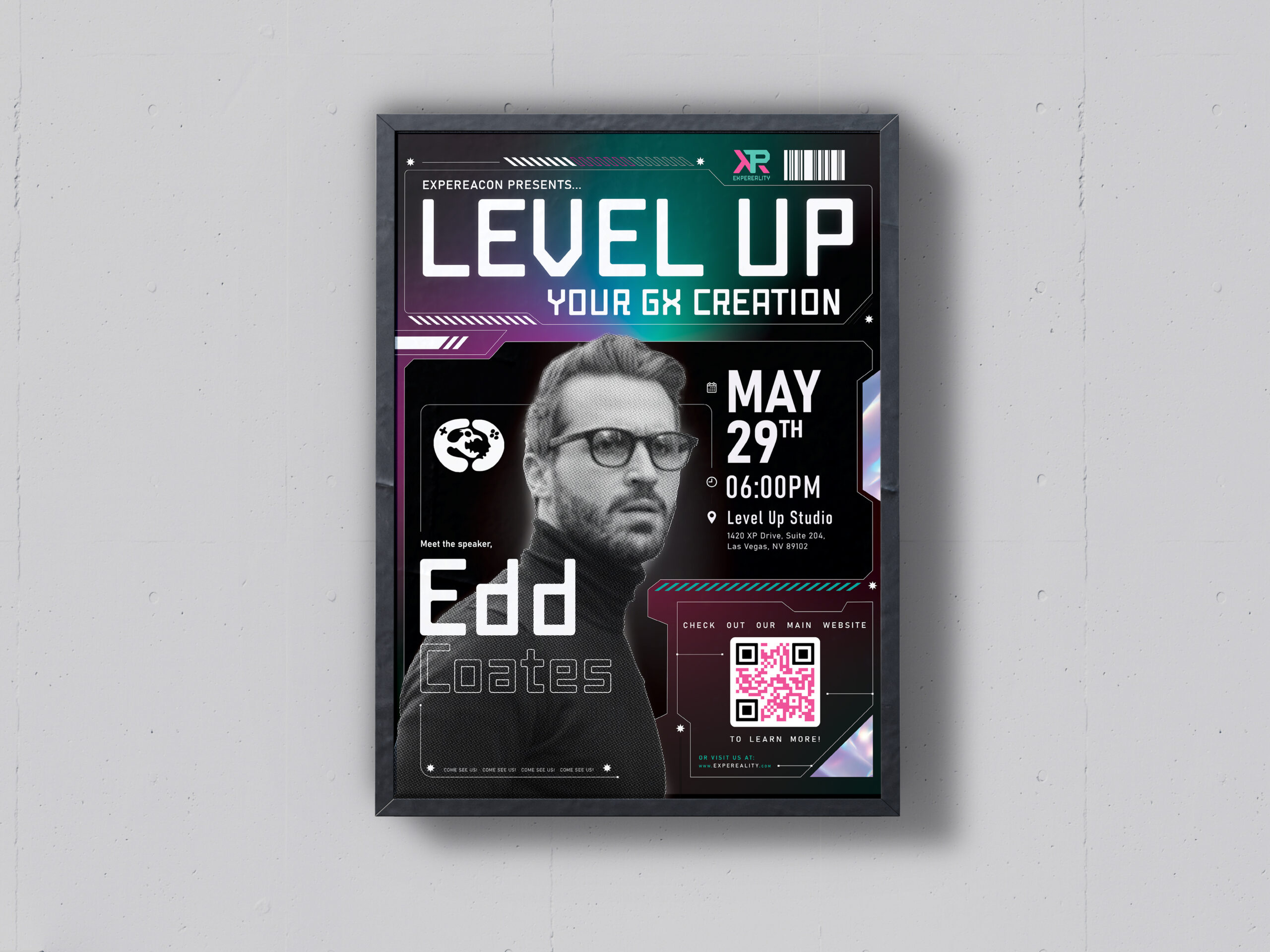
A poster advertisement focusing on gathering aspiring developers and gamers alike to learn more about the influence of “leveling up,” or improving, one’s implementation of accessible UX/UI design for the overall GX, or game experience.
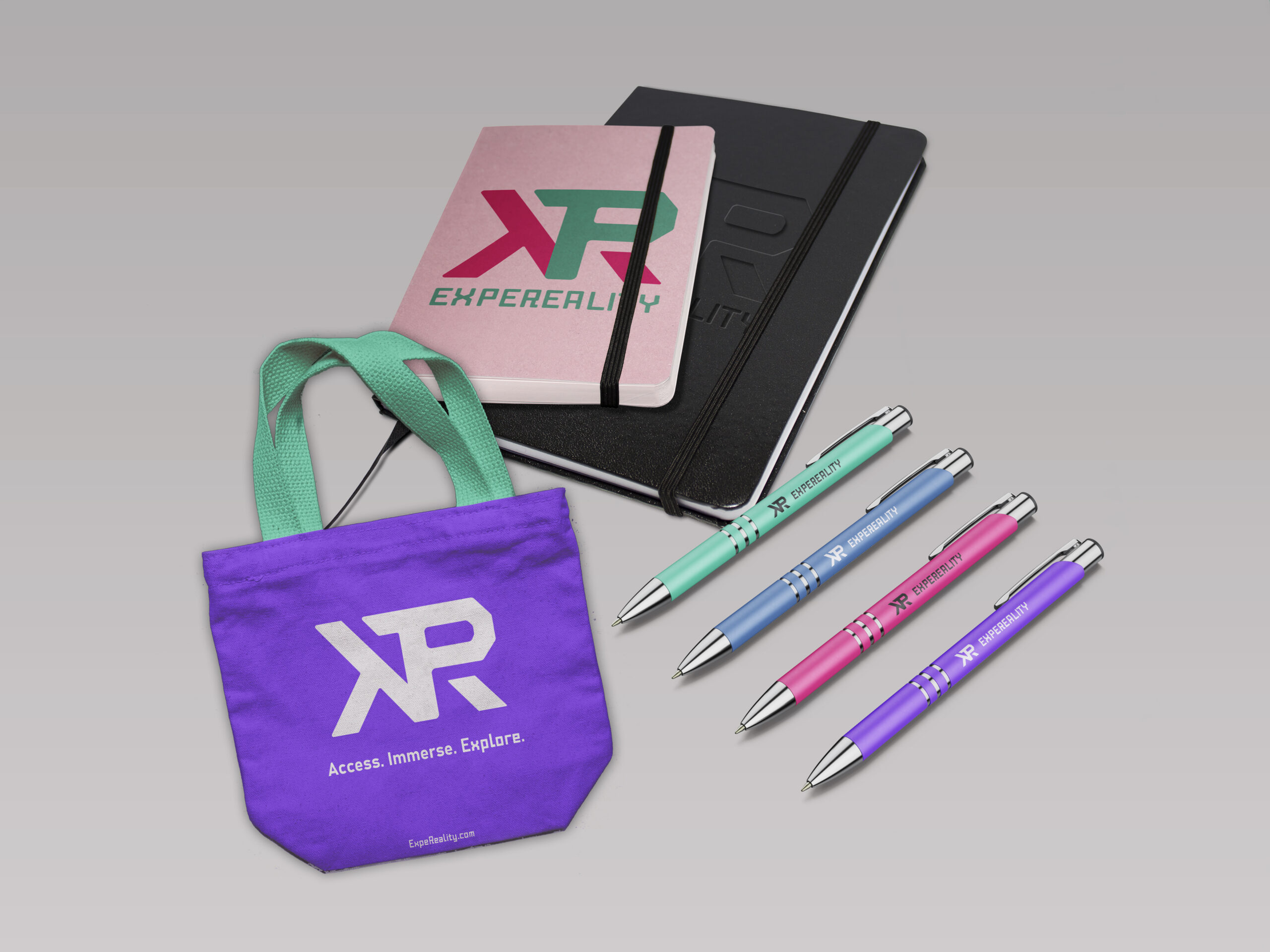
Merchandise pieces that work in conjunction with that of ExpeReality and their hosted event, ExpeReacon, providing resources and swag that not only provide benefit during the workshop event itself (through that of usability and convenience), but also keep reminders for ExpeReacon attendees and others interested.
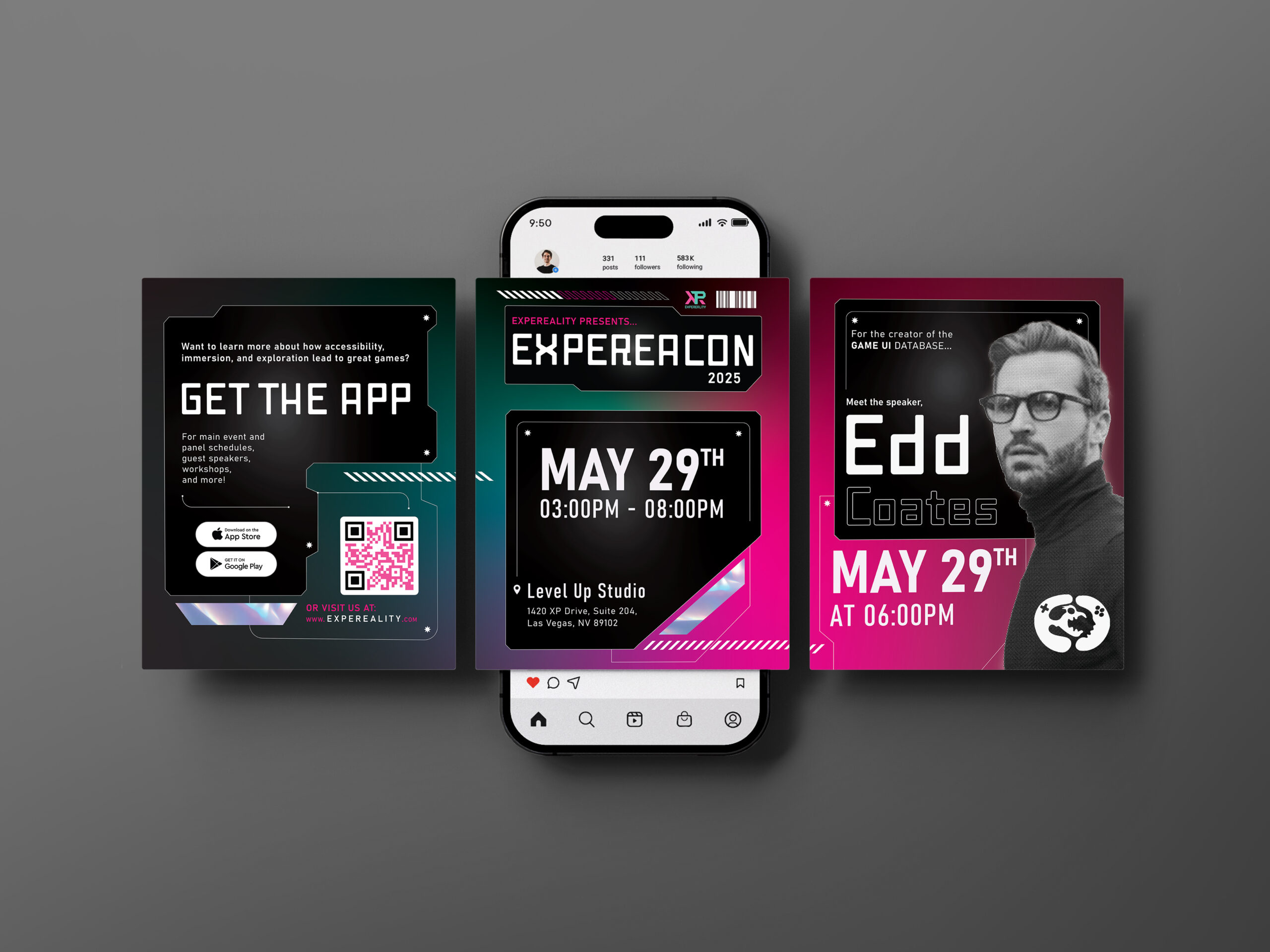
A social media (Instagram) feed layout advertisement that, much like the poster, focuses on gathering aspiring developers and gamers alike to learn more about the importance of improving one’s implementation of accessible design for game visuals.
TIME-BASED
“SHATTERED CRIMSON” EXPEREALITY STUDIOS ANIMATION ADVERTISEMENT
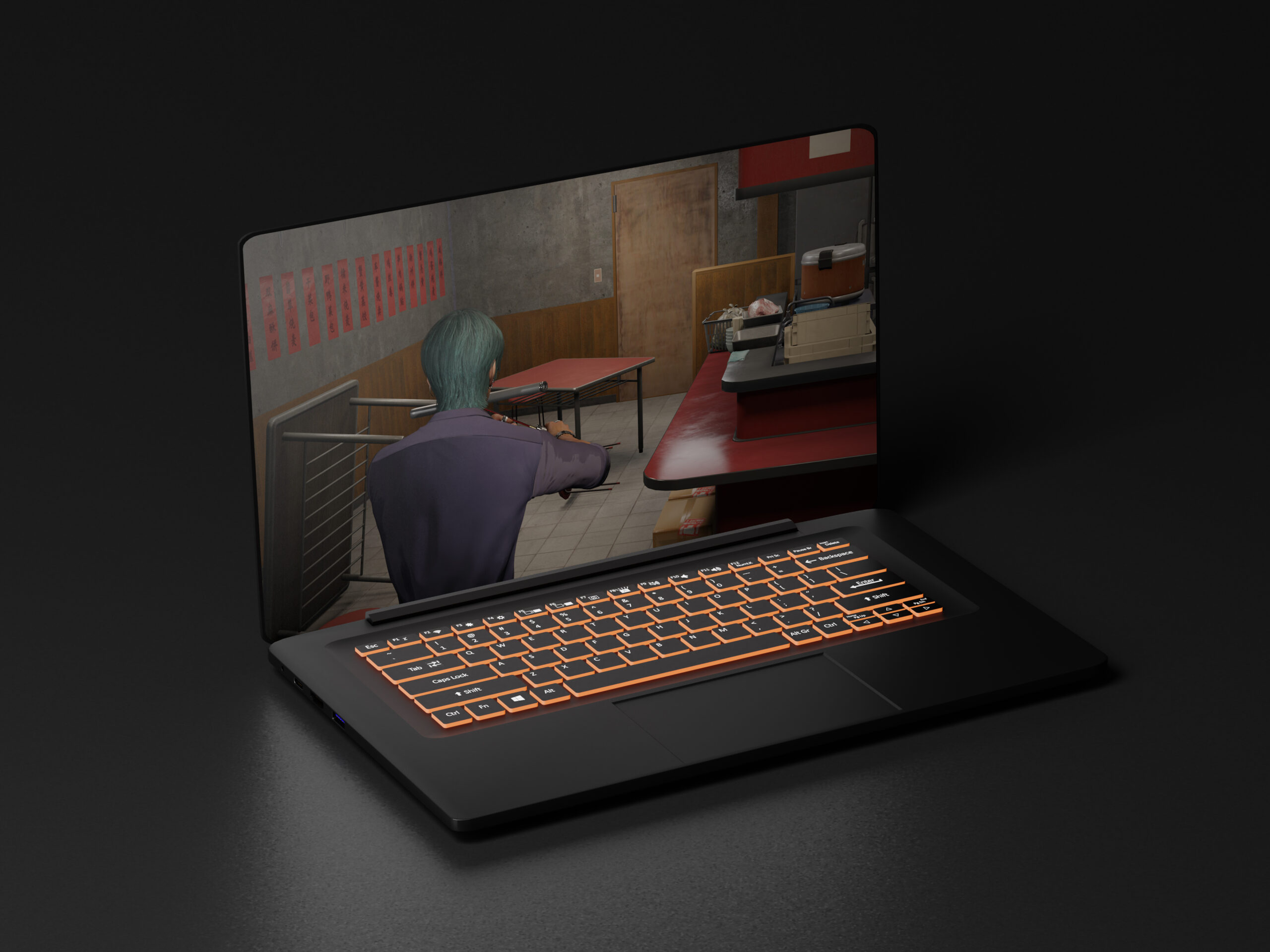
A video advertisement (animated from scratch) that showcases the game created by ExpeReality, “Shattered Crimson,” which exemplifies a few functionalities of possible game UX/UI design implementations for accessibility.
PACKAGING
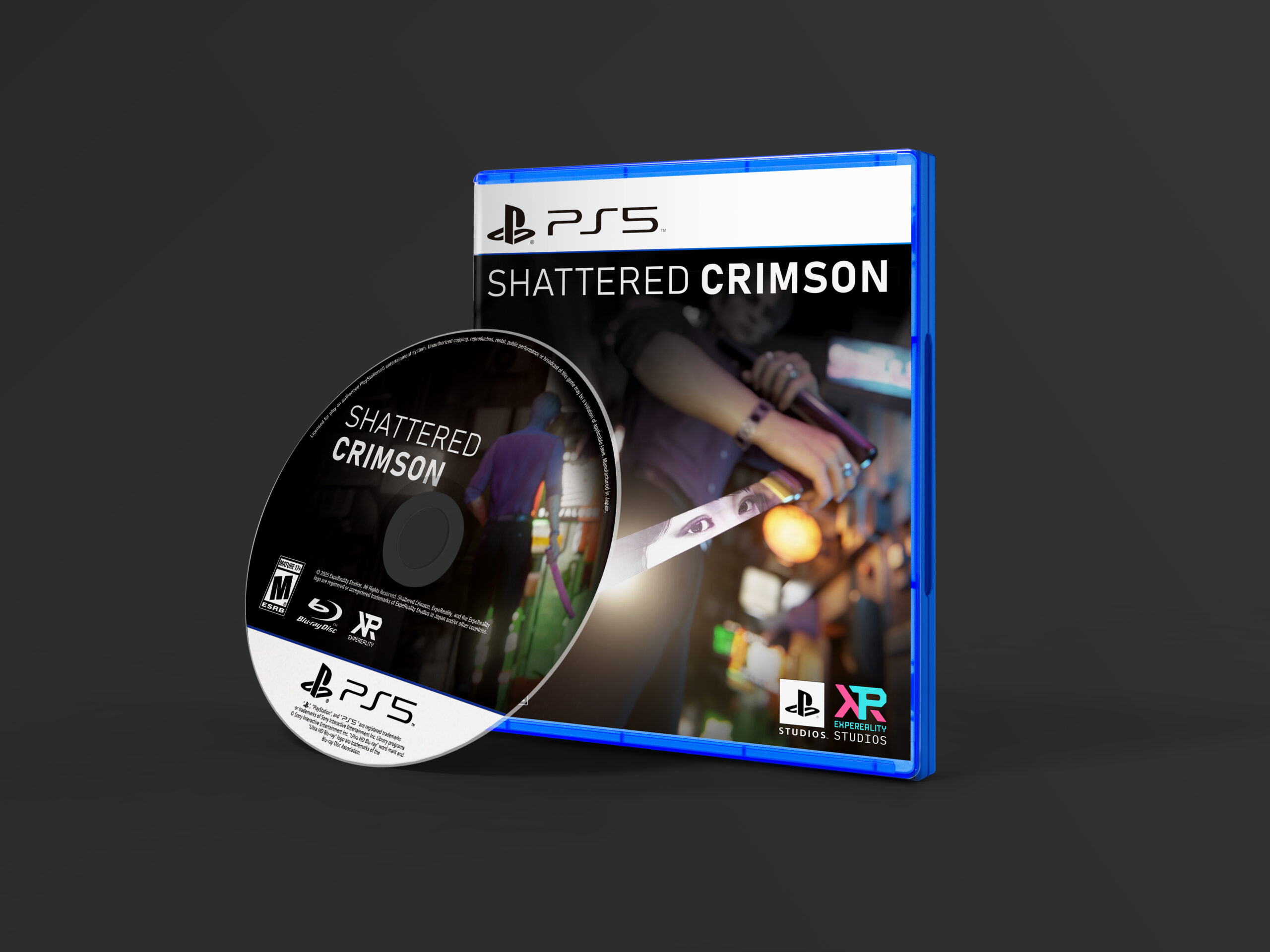
A video game casing (rendered from scratch) that showcases the game created by ExpeReality, “Shattered Crimson,” which pairs to show a few functionalities of possible game UX/UI design implementations for accessibility.